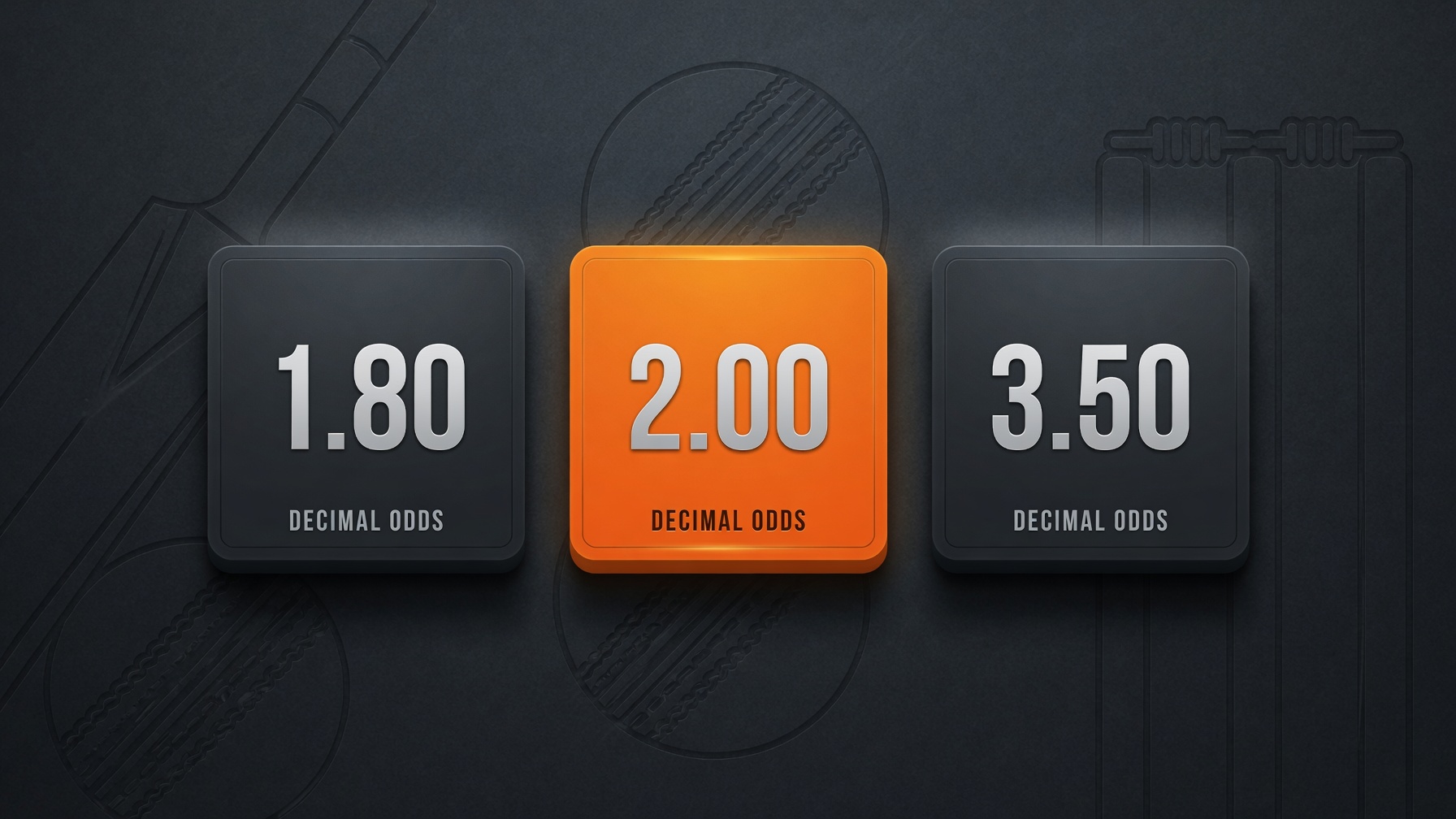
Odds can look intimidating at first, but they are really just a shorthand for two things: how much you stand to win, and how likely an outcome is judged to be. Once you can read them, the whole betting screen makes sense. This guide focuses on decimal odds, the format used across exchanges and most Indian platforms.
Decimal odds explained
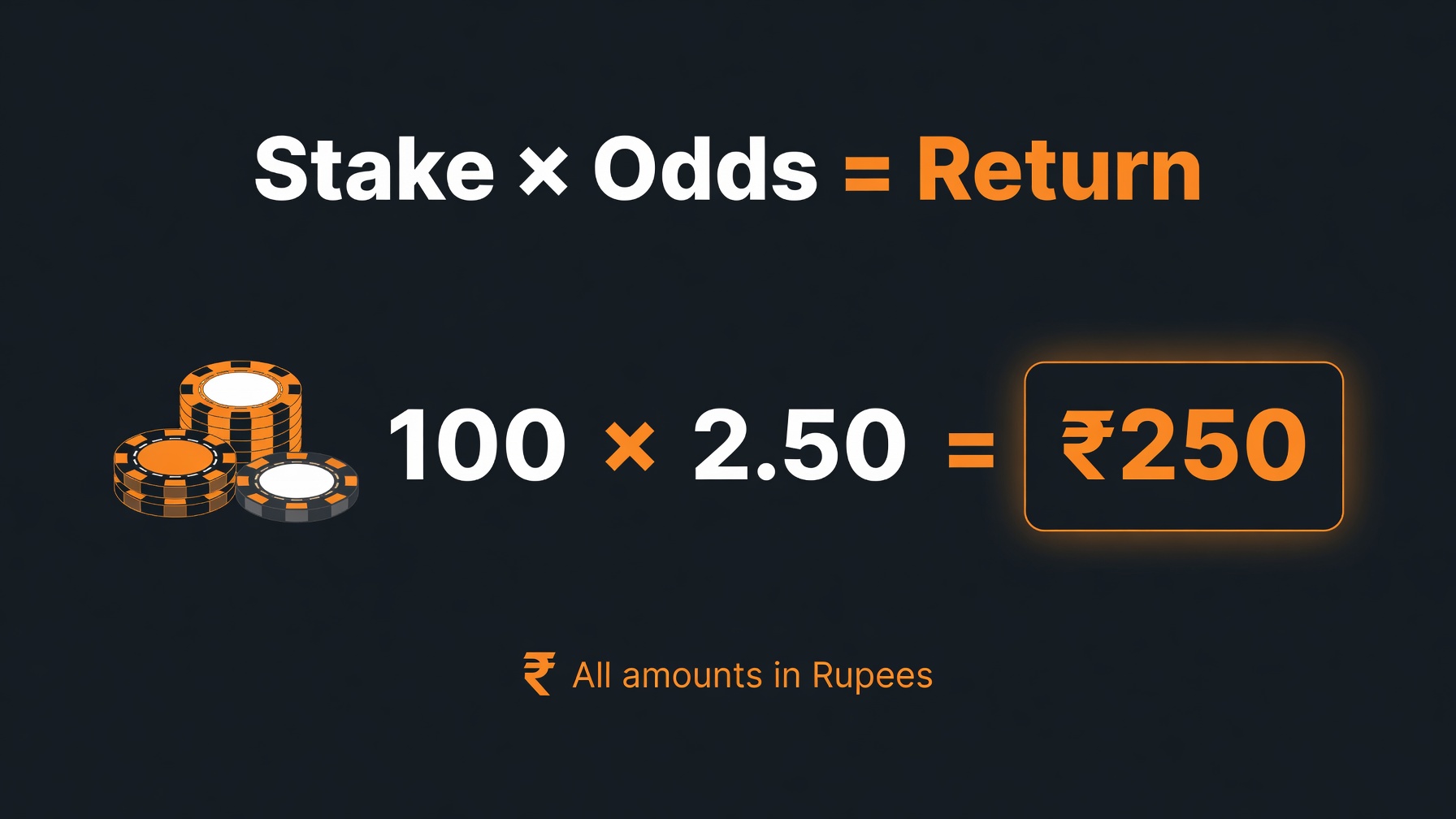
Decimal odds show the total return per ₹1 staked, including your stake back. So odds of 2.50 mean that for every ₹1 you bet, you receive ₹2.50 in total if you win — that is ₹1.50 profit plus your original ₹1. The higher the number, the bigger the potential return and, usually, the less likely the outcome is considered.
Calculating your returns
The formula is simple: total return = stake × odds. A few examples:
- ₹500 at odds of 1.80 returns ₹900 (₹400 profit).
- ₹500 at odds of 2.00 returns ₹1,000 (₹500 profit).
- ₹500 at odds of 3.50 returns ₹1,750 (₹1,250 profit).
To find profit alone, subtract your stake: profit = stake × (odds − 1).
Odds and implied probability
Every price contains an implied probability — the chance the market assigns to that outcome. You can estimate it with: implied probability = 1 ÷ odds. Odds of 2.00 imply a 50% chance (1 ÷ 2.00). Odds of 1.50 imply about 67%. Odds of 4.00 imply 25%. This is useful because it lets you compare the market's view with your own. If you believe a team is more likely to win than the price suggests, you may see value; if less likely, you may not.
Back and lay prices on an exchange
On an exchange you will see two columns for each selection: a back price and a lay price. The back price is what you can bet on the outcome happening; the lay price is what you can bet on it not happening. They sit close together, with the gap reflecting current supply and demand. If those terms are new, our guides on what a betting exchange is and matched vs unmatched bets explain the mechanics.
Why odds move
Cricket odds rarely sit still. They shift with team news, the toss, pitch reports and — once play starts — every ball. A wicket or a big over can move a price sharply. That constant movement is most visible during in-play betting, where prices update in real time.
Does a shorter price mean a better bet?
A common beginner mistake is assuming that a short price (low odds) is a "safe" bet and a long price (high odds) is automatically "good value". Neither is true on its own. A short price means the market thinks the outcome is likely, so you risk more to win less. A long price means it is considered unlikely, so you risk less to win more — but it is also less likely to land. Value is not about high or low odds; it is about whether the price is wrong compared with the real chance of the outcome. If you genuinely believe a team priced at 3.00 has a better than one-in-three chance, that might be value. Judging that well takes research and honesty about your own opinion, not a rule of thumb.
Frequently asked questions
What counts as "good odds"?
Good odds are simply odds that are longer than the true probability of the outcome justifies. There is no fixed number — it depends entirely on the match and your own assessment of the chances.
Why are the back and lay prices different?
The small gap between them reflects current supply and demand. It is normal and tends to be smaller in busy, liquid markets like Match Odds.
Do bigger odds mean a bigger chance of winning?
No — it is the opposite. Bigger odds usually mean the outcome is considered less likely, with a larger payout to compensate for the higher risk.
Key takeaways
- Decimal odds show total return per ₹1, including your stake.
- Total return = stake × odds; profit = stake × (odds − 1).
- Implied probability ≈ 1 ÷ odds — use it to judge value.
- Exchanges show separate back and lay prices that move with the market.
Understanding odds improves your decisions but does not guarantee wins. Betting is for adults; set a budget and stick to it.
Put your reading to the test
Watching prices move during a live match is the fastest way to learn. See how real-time odds work on FairPlay Live.
Explore FairPlay Live