Backing and laying are the two tools every exchange bettor uses. They are simple on their own, but knowing when to use each — and how to combine them — is where real understanding begins. This guide assumes you already know the basics from what a betting exchange is; here we focus on practical decisions.
Quick recap
To back is to bet that an outcome will happen. To lay is to bet that it will not. When you back, your risk is your stake. When you lay, your risk is your liability — the amount you must pay if the outcome you bet against actually occurs.
When to back
Backing fits when you have a positive opinion about a specific outcome. For example, you study the conditions, the team news and the matchup, and you believe the team batting second is well suited to chase. Backing them is the natural expression of that view. It is also the simpler action for newcomers, because the maths is familiar: stake times odds, as covered in how to read cricket betting odds.
When to lay
Laying fits when you have a negative opinion — you think a particular result is unlikely. Maybe a heavily favoured team is priced very short but is missing key players, and you doubt they will win comfortably. Rather than backing one specific rival, you can lay the favourite and win if anyone else prevails. Laying is also the foundation of hedging and trading.
Combining the two: the basics of trading
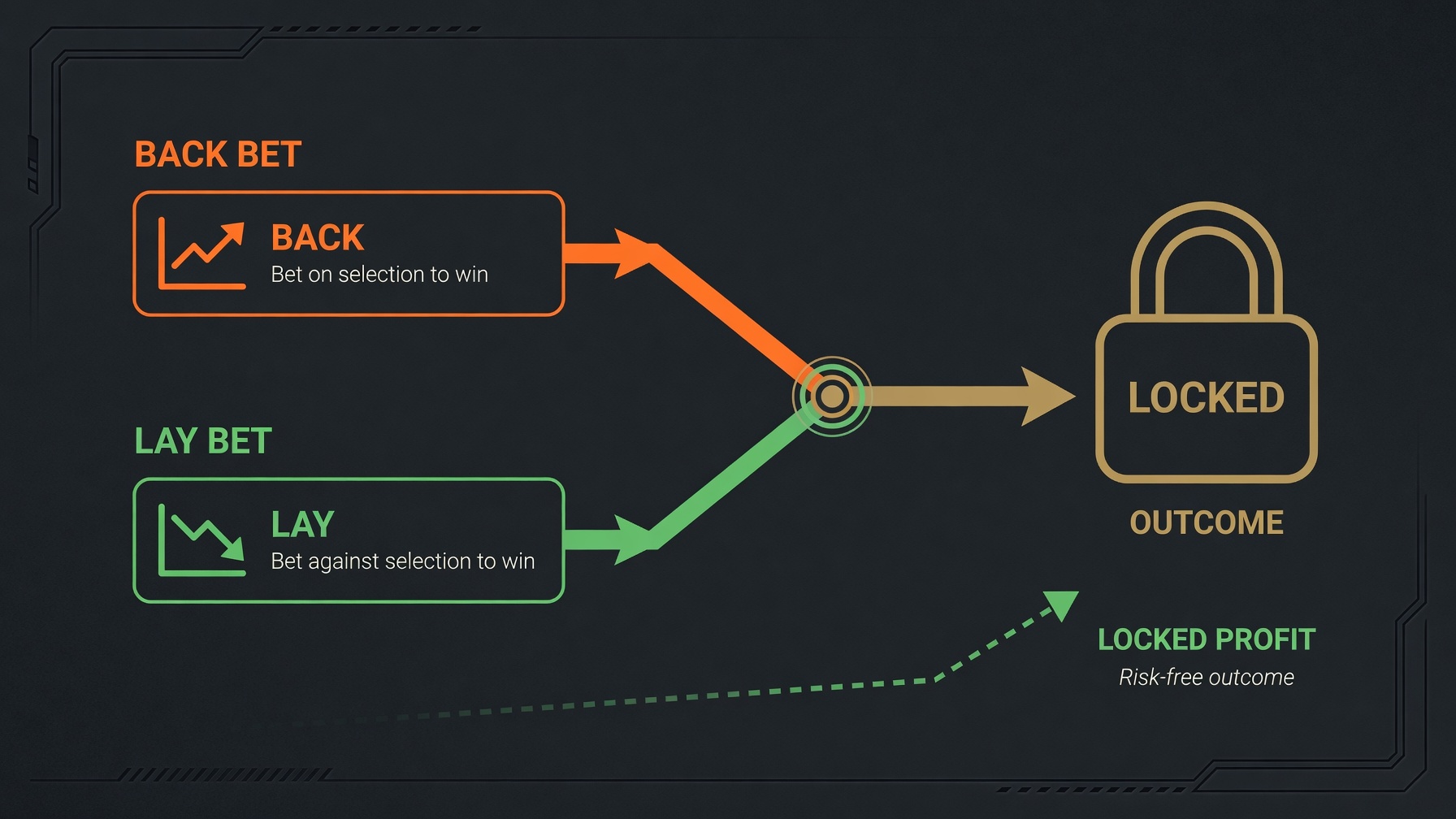
The real power of an exchange is using both actions on the same selection at different times. A classic sequence: back a team early at a higher price, then if the odds shorten as they take control, lay them later at a lower price. Done correctly, this can lock in a position so you profit regardless of the final result. This "open and close" idea is the heart of in-play betting and trading.
Understanding liability — be honest with yourself
Laying carries a risk that surprises beginners. If you lay a selection at high odds, your liability can be much larger than the amount you stand to win. For example, laying at odds of 5.0 to win ₹200 means a liability of ₹800 if the outcome lands. Always check the liability figure before confirming a lay, and never lay an amount whose downside you cannot comfortably absorb. Good bankroll management matters even more when laying.
A simple worked example
Suppose you back a team at odds of 2.50 with a ₹400 stake before the match. They start strongly, and during play their price shortens to 1.80. You now lay the same team for a stake that balances your position. Because you backed at a higher price and can lay at a lower one, you can arrange to come out ahead whether they go on to win or not — that is the essence of trading. The exact amounts depend on the prices and the lay stake you choose, and most platforms display a profit-and-loss figure for each outcome before you confirm. The key point is that two opposing bets on the same selection, placed at different prices, can lock in a result. This only works because an exchange lets you both back and lay.
Frequently asked questions
Is laying always riskier than backing?
Not always, but it can be. Your risk when laying is the liability, which at high odds can be much larger than the amount you stand to win, so always check it before confirming.
Can I lay a selection without backing it first?
Yes. Laying is a standalone bet that an outcome will not happen. You do not need an existing back bet to place one.
What happens if the team I laid wins?
You lose your liability — the amount shown when you placed the lay. That is why understanding liability before confirming is so important.
Key takeaways
- Back when you expect an outcome; lay when you expect it not to happen.
- Backing risks your stake; laying risks your liability, which can be larger.
- Using both on one selection over time is the basis of trading.
- Always read the liability before confirming a lay bet.
Laying can expose you to losses bigger than your intended win. Bet only what you can afford to lose, and never chase a position that has moved against you.
Ready for sharper tools?
Backing, laying and trading at speed is where the advanced experience shines. See what changes with the Pro setup.
Discover FairPlay Pro