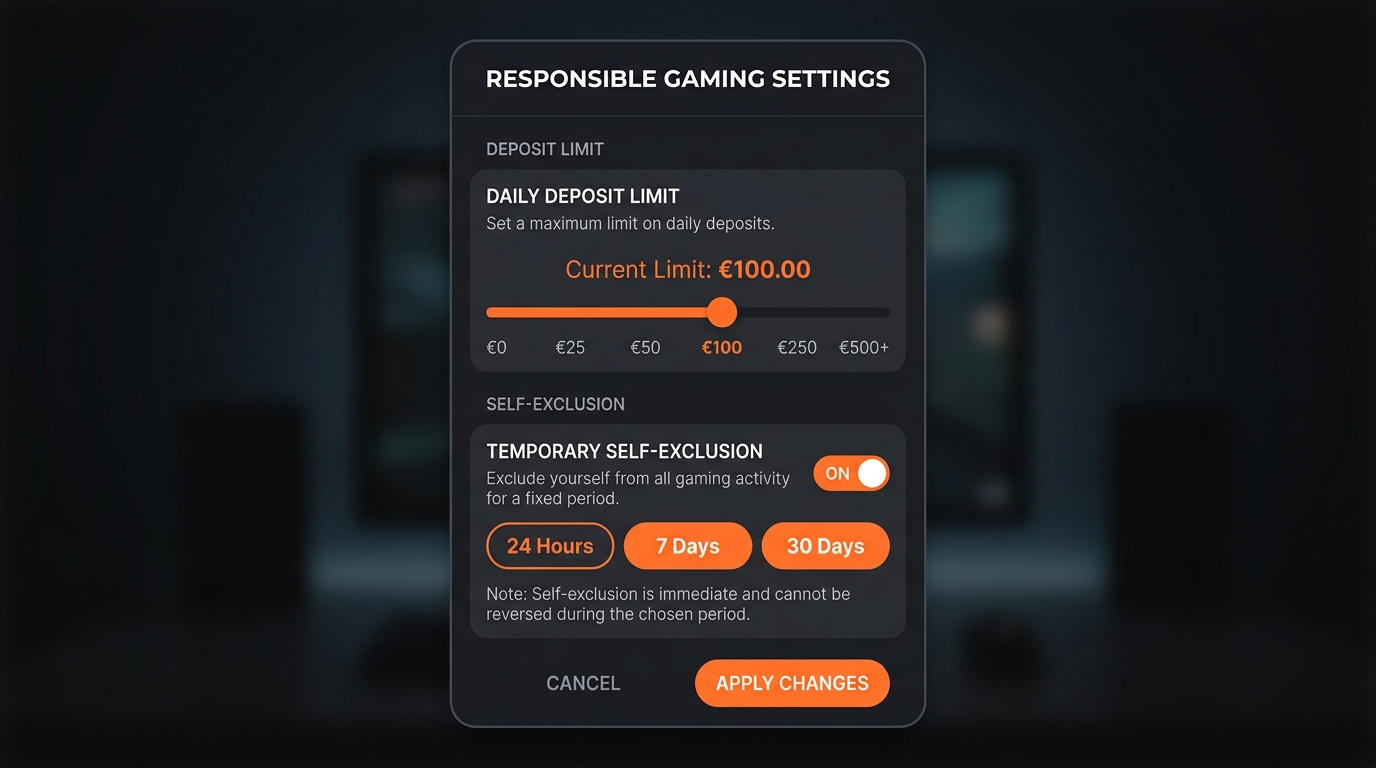
Two of the most useful responsible-gaming tools are deposit limits and self-exclusion. They exist to put your calm, sensible decisions in charge — not your in-the-moment impulses. This guide explains what each one does, how to use it, and what to expect, so you can keep betting firmly within your control. It is intended for adults aged 18 and over.
What deposit limits do
A deposit limit caps how much money you can add to your account over a chosen period — typically daily, weekly or monthly. Once you hit the cap, you cannot deposit more until the period resets, no matter how you feel in the moment. That is precisely the point: the limit holds the line for you when emotion might otherwise take over. It is the practical enforcement of the budget we discuss in responsible gambling and bankroll management.
How to set a deposit limit
- Open your account settings Look for a responsible-gaming, limits or wallet section after signing in.
- Choose the period and amount Decide on a daily, weekly or monthly cap that fits what you can comfortably afford.
- Confirm and save The limit applies going forward and quietly enforces itself every time you try to deposit.
An important, helpful design detail: lowering a limit usually takes effect quickly, while raising it often involves a deliberate cooling-off delay. That asymmetry means a moment of impulse cannot instantly undo a sensible decision you made earlier.
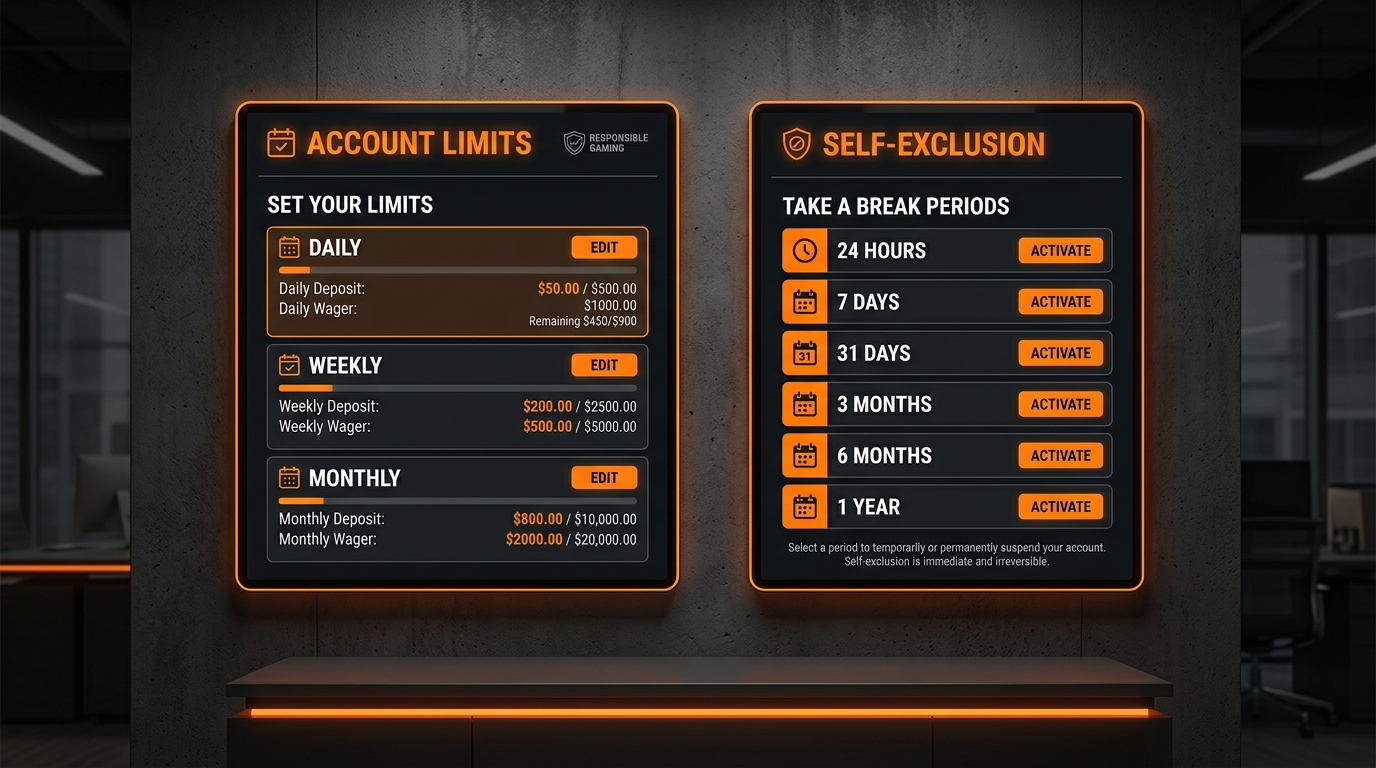
What self-exclusion is
Self-exclusion is a stronger step: a voluntary request to block your own access to your account for a set period — commonly options like 24 hours, a week, a month, or longer. During that time you cannot log in to bet. It is designed for when limits are not enough and you need a genuine break, whether to reset or to step away entirely.
What to expect during self-exclusion
While a self-exclusion is active, your account is locked for betting and marketing messages should stop. Crucially, a self-exclusion generally cannot be lifted early — that permanence is the feature, not a flaw, because it protects your future self from a decision made in a difficult moment. Any cleared balance is typically handled according to the platform's policy, so check the specific terms. When a fixed period ends, you may be asked to confirm a short responsible-gaming check before returning.
When to use each
Reach for a deposit limit early and as a matter of routine — it is simply good practice, even if you have no concerns at all. Consider self-exclusion if you notice betting taking up more time, money or headspace than you want, if you are chasing losses, or if it is affecting your mood or relationships. These are some of the warning signs covered in recognising problem gambling. Using these tools is a sign of being in control, not of having a problem. Many careful bettors set a deposit limit the very first time they sign in and then rarely think about it again, simply because it quietly caps the downside. Treat these features as standard equipment for sensible play — in the same way you would wear a seatbelt without expecting a crash.
Frequently asked questions
Can I change a deposit limit at any time?
You can usually lower a limit and have it apply quickly. Raising a limit typically involves a cooling-off delay so the change is considered, not impulsive.
Can I cancel a self-exclusion early?
Generally no. Self-exclusion is designed not to be reversed before the period ends, which is what makes it effective. Check the platform's specific terms.
Will I still get marketing during self-exclusion?
Marketing messages should be stopped while a self-exclusion is active. If you receive any in error, report it to support.
Do I need a problem to use these tools?
Not at all. Setting a deposit limit is sensible for everyone, and using any of these tools simply means you are staying in control.
Key takeaways
- Deposit limits cap how much you can add over a chosen period.
- Lowering a limit is usually quick; raising it involves a cooling-off delay.
- Self-exclusion blocks account access for a set period and is hard to reverse by design.
- Use deposit limits routinely; consider self-exclusion if warning signs appear.
These tools are there to help you stay in control. If betting is affecting your life, use them and seek free, confidential support. For adults aged 18 and over only.
Play in control, around the clock
An always-on platform makes personal limits matter most. Learn how round-the-clock play works on FairPlay 24.
Explore FairPlay 24