
Bankroll management is the unglamorous skill that keeps betting sustainable. It will not make you win — nothing can promise that — but it protects you from the most common way people get hurt: betting too much, too fast, with money they cannot spare. Think of it as the seatbelt of betting. Here are the basics, written for adults aged 18 and over.
What a bankroll is
Your bankroll is the money you have set aside specifically for betting — and only that money. It is separate from your rent, bills, savings and everyday spending. Defining it clearly is the whole foundation: once you know your bankroll, every other decision becomes simpler, because you are only ever risking funds you have already accepted you can afford to lose.
Set a budget you can afford to lose
Decide your bankroll calmly, in advance, based on what you can genuinely afford. A useful test: if losing the entire amount would change how you pay for anything important, it is too much. Your bankroll might be weekly or monthly; what matters is that it is fixed and that you never top it up mid-session to keep going. When it is gone, you are done until the next period.
Use unit staking
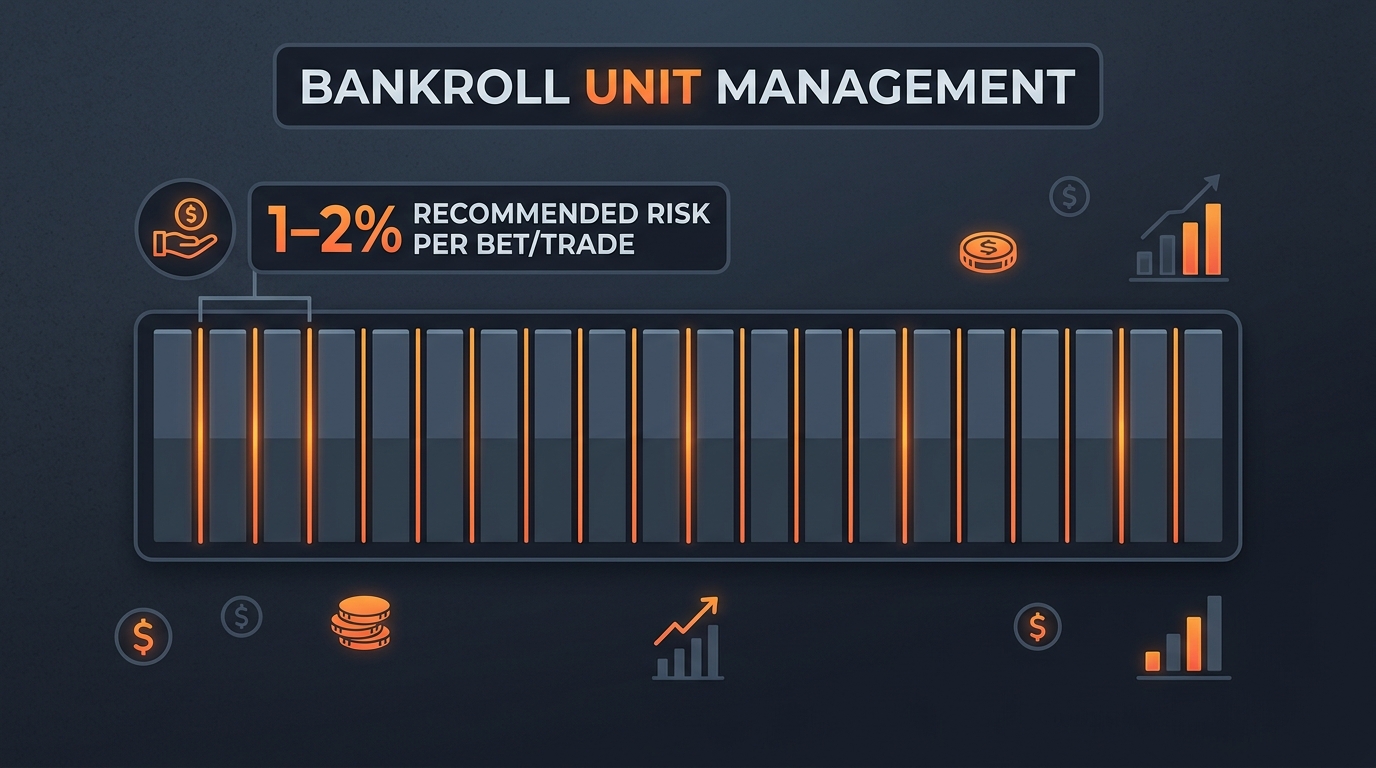
Unit staking means betting a small, consistent fraction of your bankroll on each bet rather than random amounts. Many people use something like 1–2% of their bankroll as one "unit". If your bankroll is ₹5,000 and a unit is 2%, that is ₹100 per bet. The benefits are real: a losing run cannot wipe you out quickly, you remove emotion from how much to stake, and your betting lasts far longer. Staking a huge chunk on a single "certainty" is how bankrolls disappear — and remember, there is no such thing as a certainty.
Avoid tilt and emotional betting
"Tilt" is betting driven by emotion — frustration after a loss, or overconfidence after a win. Both lead to abandoning your plan: staking more to recover, or piling in because you feel invincible. The fix is discipline. Keep your unit size constant regardless of recent results, and if you feel yourself getting emotional, stop. This links directly to the principles in responsible gambling — never chase losses, and never let a good run inflate your stakes.
Keep records and review
Writing down your bets — what you staked, the odds and the result — turns vague impressions into clear facts. Over time, records show you whether you are really ahead or behind, which markets suit you, and where emotion crept in. Many bettors are surprised by the truth when they actually look. Honest review is how you improve, and how you keep betting in proportion to your life.
Withdraw and protect your wins
Bankroll management does not end when you win. Decide in advance to withdraw a portion of any winnings rather than rolling everything back into more bets. This locks in being ahead and keeps your betting spend separate from your profit — a habit that pairs naturally with understanding how withdrawals work. Protecting wins is just as important as limiting losses. Together, the two habits are what keep betting affordable and enjoyable over the long run, rather than a cycle of deposits chasing the last result.
Frequently asked questions
What is a sensible unit size?
Many people use 1–2% of their total bankroll per bet. The exact figure is personal, but keeping units small and consistent is what matters.
Does bankroll management help me win?
No method guarantees winning. Bankroll management protects you from losing too much too fast and keeps betting sustainable and under control.
What is "tilt"?
Tilt is emotional betting — chasing losses or over-staking after a win. The cure is sticking to a fixed unit size and stopping when emotions rise.
Should I increase stakes when I am winning?
Be cautious. Sharply raising stakes on a hot streak is a common way to give winnings back. Keep your staking consistent and withdraw some profit.
Key takeaways
- Your bankroll is money set aside only for betting, separate from essentials.
- Set a fixed budget you can afford to lose and never top it up mid-session.
- Use small, consistent unit stakes (often 1–2% of the bankroll).
- Avoid tilt — keep stakes steady and stop when emotional.
- Keep records and withdraw a share of any winnings.
Bankroll management reduces risk but never removes it, and no system guarantees profit. Betting is for adults aged 18 and over — stake only what you can afford to lose.
Bet sustainably
Good habits make betting last and keep it fun. Explore the platform built around control on FairPlay.
Explore FairPlay