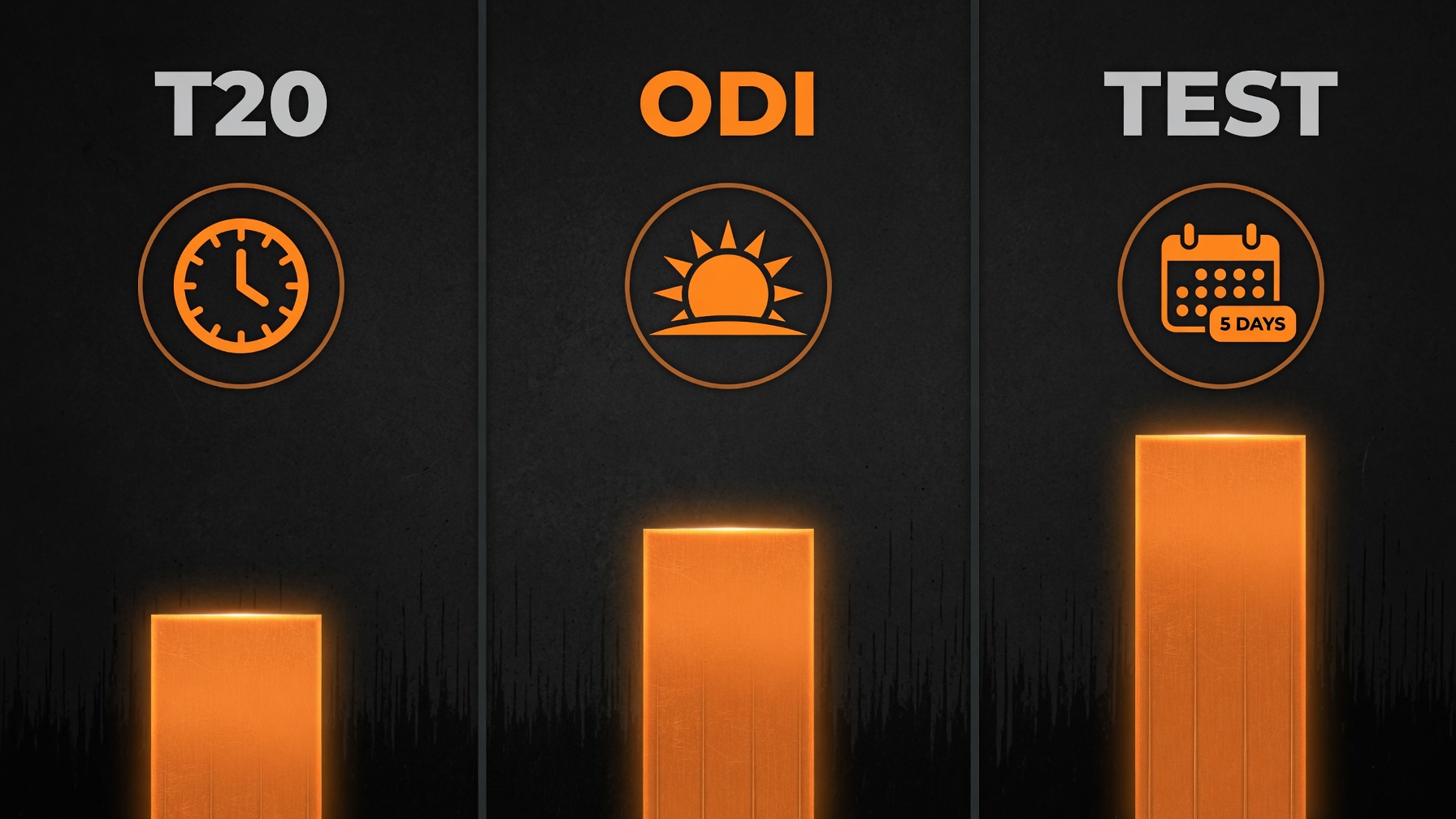
Cricket is unusual among sports in that it is played in three very different formats, each with its own rhythm, tactics and appeal. Understanding how Twenty20, One Day Internationals and Test cricket differ helps you follow any match with confidence. Here is a clear comparison, written in plain language and without assuming you already know the jargon.
Twenty20 (T20)
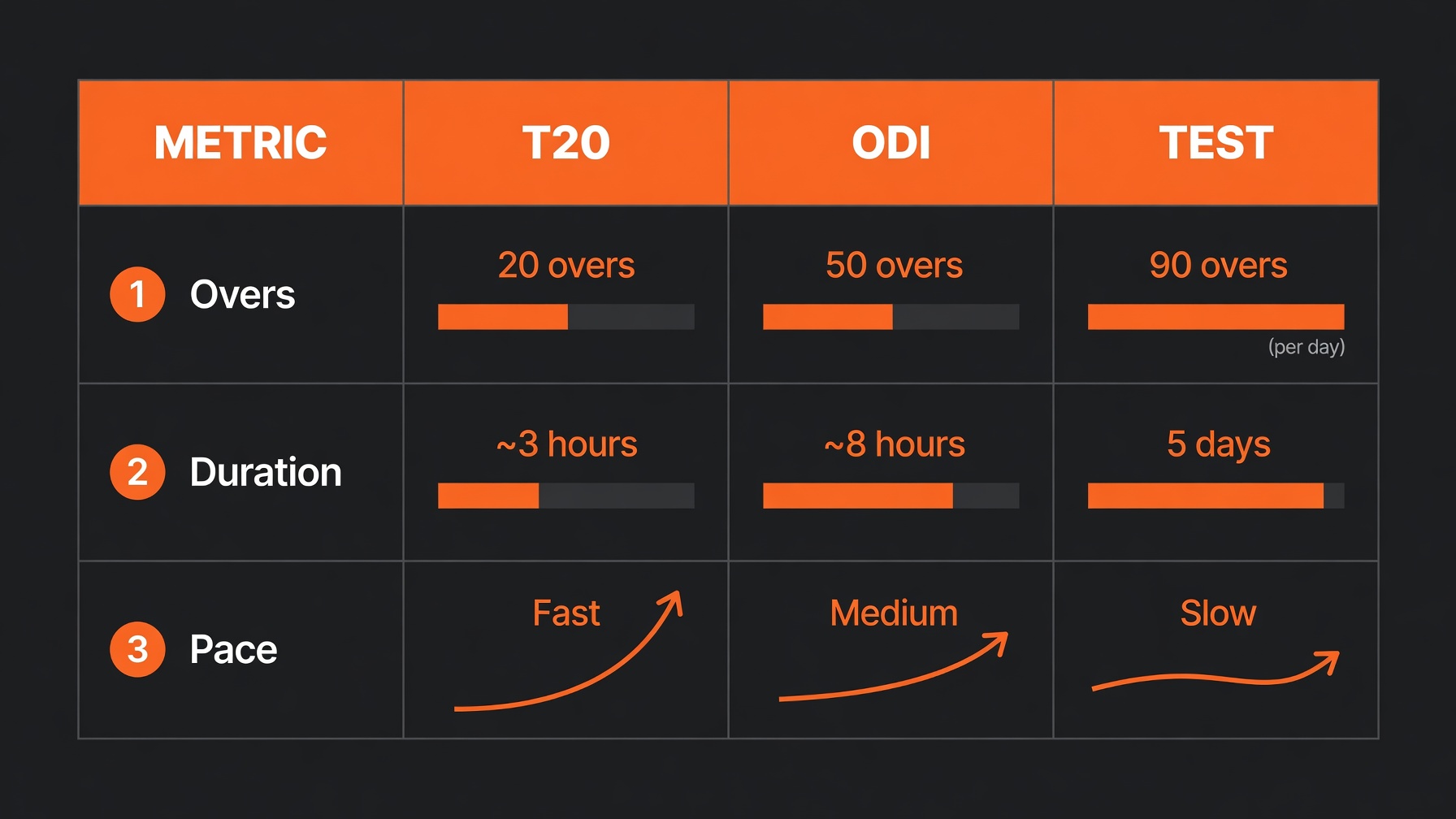
T20 is the shortest and fastest format. Each side bats for a maximum of 20 overs, and a match usually finishes in around three hours. Because batters have so few overs, the emphasis is on aggressive scoring from the very first ball. Bowlers are limited in how many overs they can bowl, and fielding restrictions early in the innings encourage big hitting. T20 is the format of leagues like the IPL and the PSL, and its short, explosive nature makes it hugely popular with new fans.
One Day Internationals (ODI)
An ODI gives each side 50 overs, so a full match lasts around eight hours across a single day. The extra time changes the tactics: teams often build an innings in phases, consolidating in the middle overs before accelerating at the end. There is more room for a side to recover from a bad start, and bowling sides have more scope to apply pressure over a longer period. ODIs sit between the all-out attack of T20 and the patience of Tests.
Test cricket
Test cricket is the longest and most traditional format, played over up to five days with two innings per side and no limit on overs. It is a test of endurance, skill and temperament. Conditions can change dramatically across five days as the pitch wears, which makes pitch and weather especially important. A Test can also end in a draw if neither side wins within the time, an outcome that does not exist in the limited-overs formats. It is a format that rewards patience and concentration from players and viewers alike.
How the formats compare
- Length: T20 (~3 hours) < ODI (~one day) < Test (up to five days).
- Overs per side: 20 (T20), 50 (ODI), unlimited across two innings (Test).
- Pace: T20 is all-out attack; ODI balances build-up and acceleration; Test rewards patience.
- Possible results: limited-overs games produce a result (or a tie-breaker); Tests can be drawn.
What the format means for following a match
The format shapes everything about how a game unfolds, including how quickly the situation — and any associated markets — can change. In T20, a single over can swing a match, which is why it suits fast-moving in-play betting. ODIs evolve more gradually, giving you time to read the game. Tests are a slow burn where momentum can shift over a session rather than an over. Matching your interest and attention span to the format makes following cricket far more enjoyable. The format also affects how a result can swing: a strong side can lose a single T20 on a bad day, whereas across five days of a Test the better team usually has more time to assert itself. None of the three is "better" than the others — they simply offer different experiences, and many fans happily follow all three for different reasons at different times of year.
Frequently asked questions
Which cricket format is the shortest?
T20 is the shortest, with 20 overs a side and a match usually lasting around three hours.
Can a T20 or ODI end in a draw?
No. Limited-overs games are designed to produce a result, with a tie-breaker if the scores finish level. Only Test cricket can be drawn.
Why do Tests last up to five days?
Tests have two innings per side and no limit on overs, testing endurance and skill across conditions that change over the days.
Which format is best for beginners to watch?
Many newcomers start with T20 because it is short and action-packed, then explore the strategy of ODIs and Tests.
Key takeaways
- T20: 20 overs a side, fast and aggressive, around three hours.
- ODI: 50 overs a side, played over one day, with phased tactics.
- Test: up to five days, two innings each, and the only format that can be drawn.
- The format determines the pace of play and how quickly situations change.
Whatever the format, if you bet, do so as an adult and within a set budget. Faster formats can move quickly, so keep your limits firm and never chase losses.
Follow every format
From a three-hour T20 to a five-day Test, there is always cricket somewhere. See how it all comes together on FairPlay.
Explore FairPlay