
"Exchange" and "bookmaker" are sometimes used as if they mean the same thing, but they are built on very different foundations. Understanding the difference helps you decide which suits the way you like to bet. If you are brand new to the idea, start with our explainer on what a betting exchange is, then come back here for the comparison.
Who you bet against
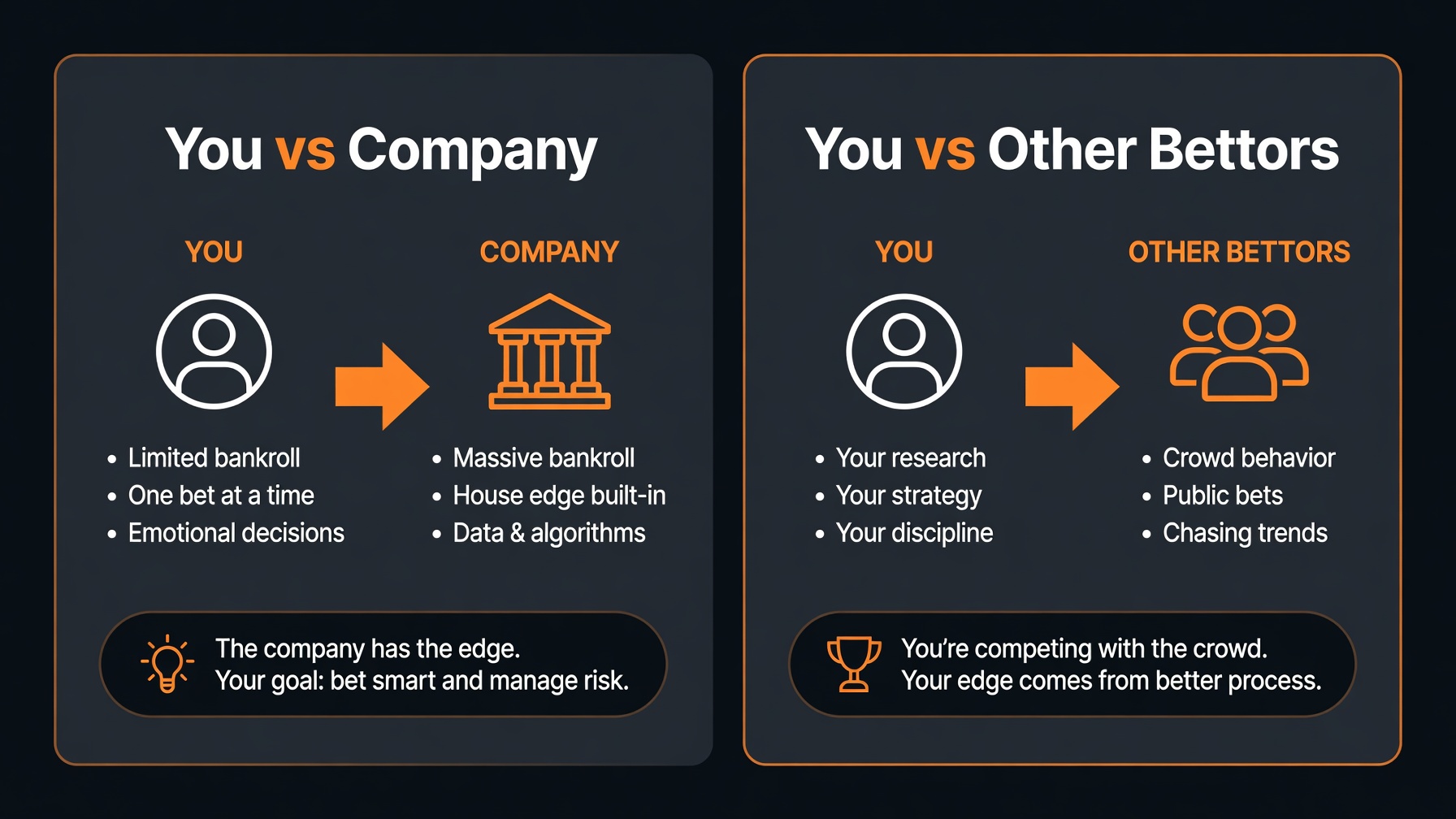
This is the single biggest difference. With a traditional bookmaker, you bet against the company. The bookmaker sets a price, you take it, and the company profits if you lose. With an exchange, you bet against other people. The platform simply matches your bet with someone who holds the opposite view and takes no side itself.
Where the odds come from
A bookmaker employs traders and models to set odds, and builds in a margin so the prices are tilted slightly in the company's favour across all outcomes. An exchange lets prices form from supply and demand between users. Because there is no single company protecting a margin, exchange prices often sit a little closer to the true market view — though they still move constantly.
Lay betting: the feature only an exchange offers
On a bookmaker you can usually only back — bet that something will happen. An exchange also lets you lay, betting that something will not happen. That one feature unlocks a whole style of play, from hedging a position to closing out a bet before the result. We explore it fully in back bet vs lay bet in cricket.
How each makes money: margin vs commission
A bookmaker earns from the margin baked into its odds. An exchange usually charges a small commission on net winnings instead. Neither is "free" — but the mechanics differ, and it is worth being honest that no model removes risk or guarantees profit. Your research and discipline matter far more than the platform type.
Flexibility and control
Exchanges tend to offer more control: you can ask for a specific price and wait for it to be matched, trade in and out of a position as odds move, and use cash out to settle early. Bookmakers are often simpler and faster for a quick single bet, with promotions and a more guided experience. Different tools for different needs.
At a glance
- You bet against: the company (bookmaker) vs other users (exchange).
- Odds set by: the company vs the market.
- Lay betting: usually no vs yes.
- Revenue model: margin in the odds vs commission on winnings.
- Style: simple single bets vs flexible trading and hedging.
Which one is right for you?
There is no universal answer — it depends on how you like to bet. If you want a quick single bet with a simple, guided experience and the occasional promotion, a bookmaker can feel more convenient. If you value control — choosing your own price, laying outcomes, trading in and out, and using cash out — an exchange gives you tools a bookmaker cannot. Many experienced bettors use the exchange precisely because they want to manage a position rather than place a bet and simply wait for the result. The important thing is to pick the approach that matches your understanding and your goals, and to learn the mechanics before committing real money. Whichever you choose, the underlying maths of reading odds stays exactly the same.
Frequently asked questions
Is an exchange better than a bookmaker?
Neither is automatically better. An exchange offers more control and lay betting; a bookmaker is often simpler and faster for a single bet. Neither removes risk or guarantees profit — your research and discipline matter far more than the platform type.
Can a complete beginner use an exchange?
Yes. Start with simple back bets on the Match Odds market, which works much like a normal bet, and add laying and trading only once you are comfortable.
How does an exchange charge me?
Most exchanges take a small commission on your net winnings rather than building a margin into the odds, so you typically pay only when you finish ahead on a market.
Key takeaways
- The core difference is who takes the other side of your bet.
- Exchanges allow laying; most bookmakers do not.
- Exchanges typically charge commission rather than building a margin into odds.
- Neither option removes risk — skill and discipline still decide results.
Whichever model you use, betting is for adults and carries real risk. Set a budget before you start and never chase losses.
Prefer the exchange approach?
If flexibility and laying appeal to you, the advanced exchange experience is worth a closer look.
Discover FairPlay Pro